
When winter approaches and your furnace sputters to life with a concerning clang, you might start wondering how much longer it can last. Home heating system replacement is one of those major home investments that homeowners often put off until it becomes unavoidable. But understanding what goes into this process—from efficiency ratings to installation complexity—can help you make an informed decision and avoid costly mistakes down the line.
Your existing furnace, boiler, or heat pump has been quietly working to keep your family warm for years. However, most furnaces reach their practical limit after 15 to 20 years of service. When repairs become frequent, energy bills climb steadily, or your home develops uneven heating patterns, replacement becomes more cost-effective than continuing to patch up an aging system. Think of your current setup as having specific architectural characteristics: your ductwork, venting system, gas lines, and electrical connections all form an integrated network that any replacement system must work within.
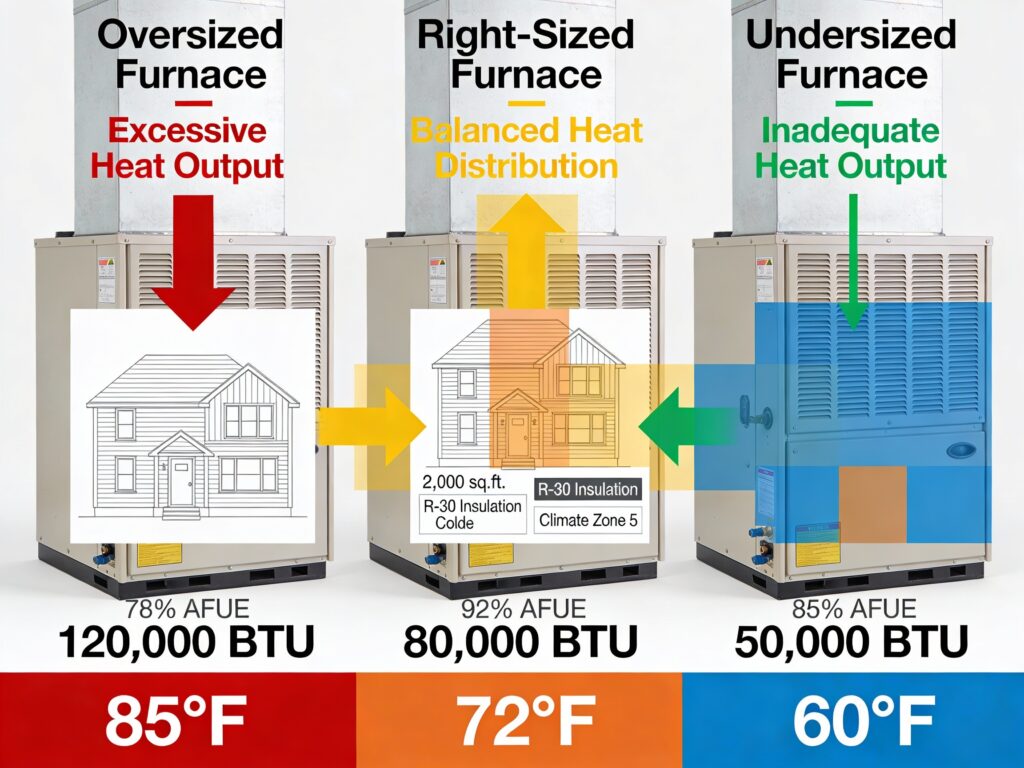
One of the most overlooked aspects of furnace replacement is getting the sizing right. Your home’s square footage, insulation quality, climate zone, and ceiling height all determine the exact BTU (British Thermal Unit) capacity your replacement system needs. An oversized furnace cycles on and off too frequently, wasting energy and wearing out prematurely. An undersized unit struggles to maintain consistent comfort and runs continuously, driving up utility costs. A professional load calculation is non-negotiable: it’s the difference between a system that runs efficiently for two decades and one that wastes money from day one.
When shopping for a new heating system, AFUE (Annual Fuel Utilization Efficiency) becomes your primary metric. Expressed as a percentage, AFUE tells you how much of the fuel energy actually converts into heat for your home. The federal minimum is 80% AFUE, but modern systems regularly achieve 90 to 96% efficiency. The jump from an 80% to a 96% AFUE furnace can reduce your heating bills by up to 20% annually. While high-efficiency models cost more upfront, sometimes $3,000 to $5,000 more, the energy savings accumulate steadily, making them genuinely worthwhile over the system’s 15 to 20 year lifespan.
Condensing furnaces represent the cutting edge of efficiency technology. These units capture heat from exhaust gases that older systems simply vent away, channeling that reclaimed energy back into your home. It’s a sophisticated engineering solution that directly translates to lower monthly heating costs.
Single-stage furnaces operate like an on-off switch: they run at full capacity when called upon and shut down completely when your home reaches the target temperature. They’re the most affordable upfront option, but they waste energy cycling repeatedly and create temperature swings throughout your home. Two-stage furnaces feature low and high output modes, allowing them to modulate based on actual heating demand. This flexibility delivers more consistent comfort and improved efficiency without the premium price tag of fully modulating systems. If comfort and efficiency matter to you, a two-stage system offers superior value compared to single-stage alternatives.
Modulating furnaces represent the premium option, continuously adjusting heat output in fine increments to match your home’s exact needs at any moment. They’re the most efficient choice and deliver exceptionally even heating, but they also carry the highest initial cost.
The furnace unit itself is only part of the replacement equation. Professional furnace installation typically represents 30 to 50% of your total investment, and several factors influence that number significantly. If your new system requires ductwork modifications, updated venting, or gas line adjustments, these add $500 to $1,500 to the project. Converting from an oil heating system to gas requires additional infrastructure work. Your home’s existing plenum—the critical junction where heated air enters your ductwork—must be compatible with the new furnace, and if it isn’t properly sealed, air leaks will undermine your system’s efficiency.
Geographic location matters too. Labor rates vary considerably by region, and local permit requirements add another layer of complexity. A licensed HVAC technician handling the installation is non-negotiable. Poor installation can reduce system efficiency by up to 30% and void manufacturer warranties.
Average furnace replacement costs range from $4,500 to $8,000 in most markets, with the breakdown typically looking like this: furnace unit ($2,500 to $5,000), labor and installation ($1,500 to $3,000), and permits, ductwork, or accessory upgrades ($500 to $1,500). High-efficiency models and complex installations push costs higher, potentially exceeding $10,000. However, several cost-reduction strategies exist. Scheduling installation during off-peak seasons such as spring or early fall often yields better pricing. Manufacturer rebates, utility company incentives, and federal energy-efficiency tax credits can substantially offset your actual out-of-pocket expense. Comparing multiple quotes from licensed contractors gives you clarity on market rates and available options.
The choice between single-stage, two-stage, and modulating furnaces comes down to balancing upfront cost against long-term operating expenses and comfort preferences. A high-efficiency two-stage furnace often represents the sweet spot for most homeowners: meaningfully better performance than single-stage models without the premium cost of full modulation. Professional guidance matters enormously here. A qualified HVAC technician will perform the load calculation, assess your home’s specific needs, evaluate your existing infrastructure, and help you select a system that delivers genuine value rather than simply the lowest purchase price.
When you’re ready to move forward with your furnace replacement, our professional furnace installation service ensures your new system is properly sized, correctly installed, and optimized for maximum efficiency. We also offer comprehensive furnace maintenance programs to keep your new system running smoothly for years to come. If you’re experiencing frequent breakdowns with your current unit and want to explore whether replacement makes sense, our furnace repair specialists can provide honest guidance on repair versus replacement.
Your heating system replacement is a significant investment in your home’s comfort, efficiency, and safety. Taking time to understand the key variables—system sizing, efficiency ratings, installation requirements, and total cost implications—positions you to make a decision you’ll feel confident about for the next 15 to 20 years.